
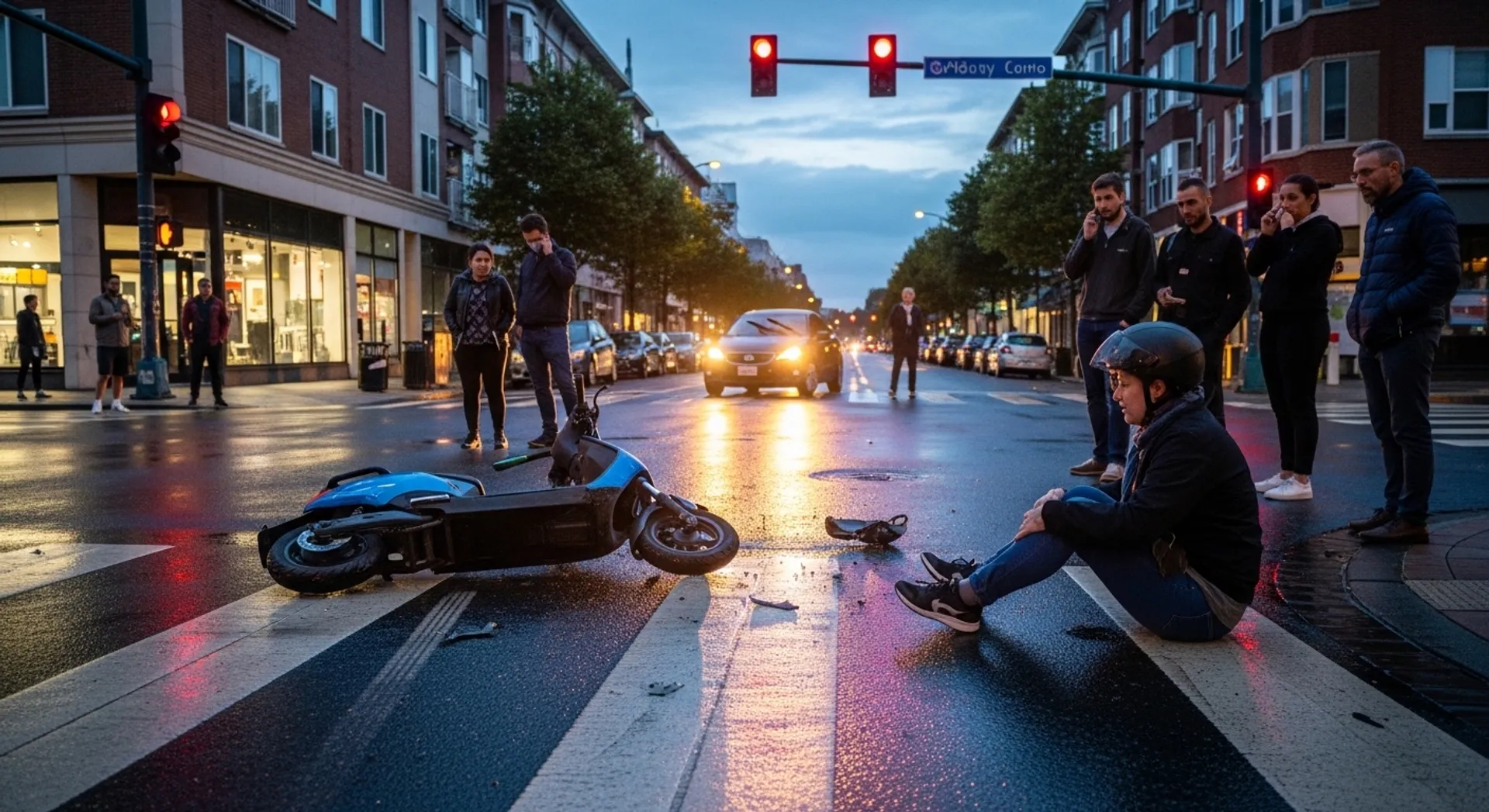
Electric scooters and e-bikes are everywhere now. They’re fast, convenient, and cheap—until a crash happens. When someone gets hurt in an e-scooter accident, the biggest question is usually not “What happened?” but “Who pays?” Liability can get messy because micromobility crashes often involve multiple possible at-fault parties: a driver, the rider, a rental company, a property owner, or even a city contractor that left a hazard in the roadway.
This guide breaks down how liability works in an e-scooter accident claim, what evidence actually moves the needle, and how to avoid the common mistakes insurance companies use to reduce payouts.
Why E-Scooter Accidents Are Different From Typical Car Crashes
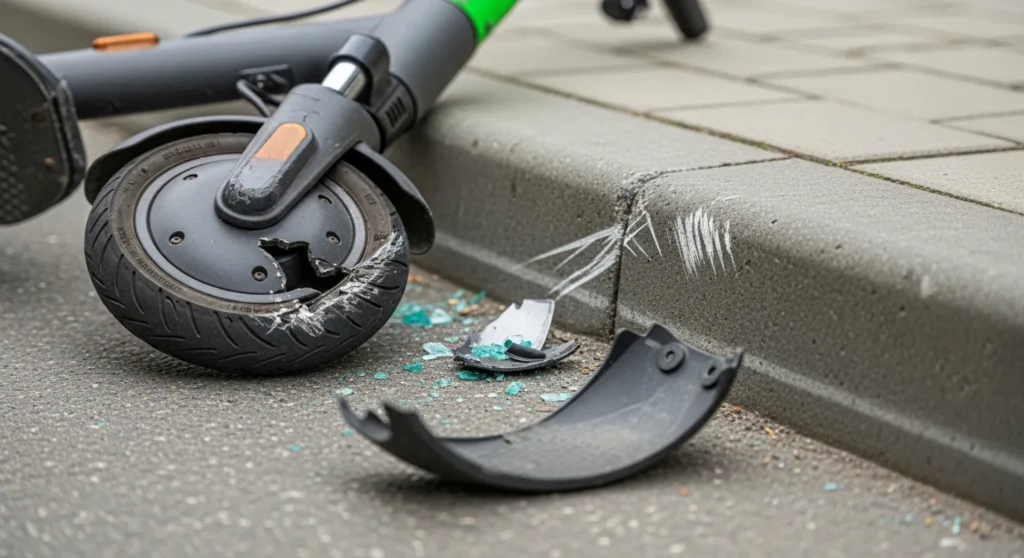
E-scooter collisions are not always “vehicle vs vehicle.” Many are single-rider crashes caused by roadway defects, curb edges, potholes, loose gravel, or sudden braking. Others involve cars turning across a scooter’s path, opening doors, or failing to yield at intersections. And some involve pedestrians struck on sidewalks or paths.
That variety is exactly why liability is not automatic. Your claim strategy depends on identifying the correct at-fault party and locking down evidence early.
Who Can Be Liable in an E-Scooter Accident?
1) A Driver (Car, Truck, Motorcycle, Rideshare)
If a motorist hits a scooter rider, liability often comes down to classic negligence: failing to yield, unsafe turns, distracted driving, speeding, or opening a door into a rider’s lane (“dooring”). Evidence like dashcam footage, intersection cameras, and witness statements can be decisive.
If your crash involved a driver who was texting or not watching the road, read this related guide:
Distracted Driving Accidents and Legal Liability.
2) The E-Scooter Rider (Including Comparative Fault)
Sometimes the rider shares fault—riding too fast for conditions, ignoring traffic rules, riding at night without visibility, or using a sidewalk where it’s prohibited. Many states use comparative negligence, meaning your compensation can be reduced by your percentage of fault rather than denied outright.
Translation: even if the insurance company tries to blame you, you may still have a strong case if another party was primarily responsible.
3) The Rental Company or Scooter Manufacturer
Rental companies and manufacturers can be liable in certain situations, such as:
- Mechanical failure (brakes, folding mechanism, steering problems)
- Maintenance issues (worn tires, loose parts, faulty lights)
- App or operational issues (speed limit settings, geofencing errors, improper warnings)
These cases may involve product liability or negligent maintenance. They often require preserving the scooter itself as evidence, which is why speed matters (more on that below).
4) A City, County, or Government Contractor (Roadway Hazards)
If the crash was caused by a pothole, broken pavement, uneven utility cut, missing signage, or dangerous construction conditions, a government entity or contractor could be liable. However, claims against public entities often have shorter notice deadlines than ordinary injury cases.
If your crash happened because of a hazardous condition on property (sidewalk, parking lot, store entrance), see:
Slip and Fall Accidents: Proving Property Owner Negligence.
5) A Property Owner or Business (Premises Liability)
Private property hazards can cause scooter crashes too—poor lighting, unmarked steps, debris, slippery surfaces, or uneven walkways. In those cases, a premises liability theory may apply.
Top Evidence That Strengthens an E-Scooter Accident Claim
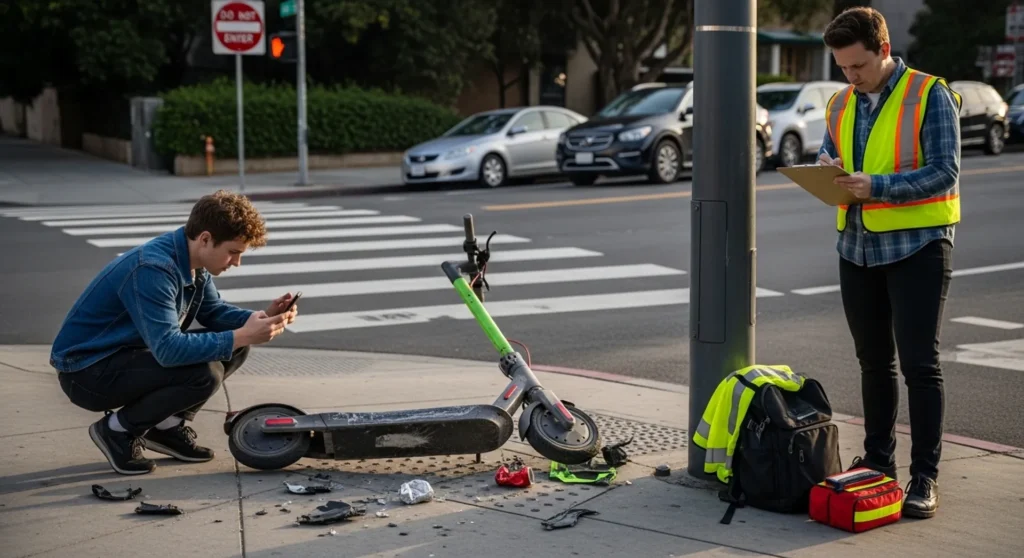
Photos and video (within minutes if possible)
Before the scooter is moved (if safe), capture:
- Wide shots of the scene (street, intersection, traffic signals)
- The scooter and visible damage
- Road hazards (pothole depth, loose gravel, broken curb edge)
- Skid marks, debris, and final resting position
- Injuries (initial bruising/swelling matters)
Incident report / police report
Even if the crash seems “minor,” documentation helps establish the timeline and parties involved. If police don’t respond, document who you spoke with (security, building manager, rental support) and keep screenshots.
Witness names and contact info
Independent witnesses are gold. Get names, phone numbers, and a short written note on what they saw.
Medical records (don’t delay)
Scooter injuries can look “okay” at first and then get worse over the next 24–72 hours. Waiting can hurt your health and your claim.
If symptoms appeared later, this matters for your case:
Injury Symptoms That Appear Days After a Car Accident.
Preserve the scooter evidence
If it’s a rental, take detailed photos of:
- Serial number / QR code
- Brake levers, wheels, tires, and folding latch
- App ride summary and receipts
If you own the scooter, do not repair or discard it until you’ve spoken with counsel. The hardware can prove a defect or failure.
Common E-Scooter Accident Injuries (and Why Insurers Downplay Them)
E-scooter crashes often involve:
- Wrist and arm fractures (people instinctively brace on impact)
- Dental and facial injuries
- Knee and ankle trauma
- Concussions and head injuries
- Road rash and deep lacerations
Insurance companies love to call these “soft tissue” or “minor” until the bills stack up. If you’re getting lowballed early, it’s not an accident—it’s a tactic.
Read how that plays out and what to do:
Why Insurance Companies Lowball Injury Claims.
What to Do Immediately After an E-Scooter Crash
Step 1: Prioritize safety and medical care
Move out of traffic if possible. Call emergency services if there’s head impact, severe pain, or bleeding.
Step 2: Document everything (then back it up)
Upload photos to cloud storage and email key files to yourself. This prevents “lost phone” disasters.
Step 3: Don’t give a recorded statement too soon
Insurers may act friendly and push for a quick statement. A recorded statement can be used to twist your words before you even know your diagnosis.
Step 4: Track costs and life impact
Keep receipts and notes for:
- Medical visits, prescriptions, physical therapy
- Missed work and reduced hours
- Pain levels, sleep problems, limited mobility
How Liability Is Proven (Plain English)
Most claims come down to four points:
- Duty — someone had a responsibility to act safely (drivers, property owners, companies)
- Breach — they failed to meet that responsibility
- Causation — that failure caused the crash
- Damages — you suffered harm (medical bills, lost income, pain)
Your goal is to make those four points easy to prove with documentation and credible witnesses.
Settlement Tips: What Actually Increases Claim Value
- Consistent treatment (gaps in care are used against you)
- Objective proof (imaging, specialist notes, therapy records)
- Clear liability evidence (photos, video, witnesses)
- Accurate wage loss documentation (pay stubs, employer letters)
- Patience (fast settlements are often cheap settlements)
If you’re unsure whether you should involve a lawyer yet, this explains the timing:
When Should You Hire a Personal Injury Lawyer After an Accident?
Bottom Line: Treat E-Scooter Claims Like Serious Injury Cases
Micromobility crashes aren’t “small claims” just because the vehicle is small. The injuries can be significant, and the liability puzzle can be harder than a standard rear-end collision.
If you were injured, protect your health first, then protect your case: document the scene, preserve scooter details, seek medical care, and don’t let an insurer rush you into a statement or a low settlement.
External authority resource: For national safety and injury trend information on e-scooters and e-bikes, see the U.S. Consumer Product Safety Commission’s micromobility safety hub:
CPSC Micromobility Information Center.