
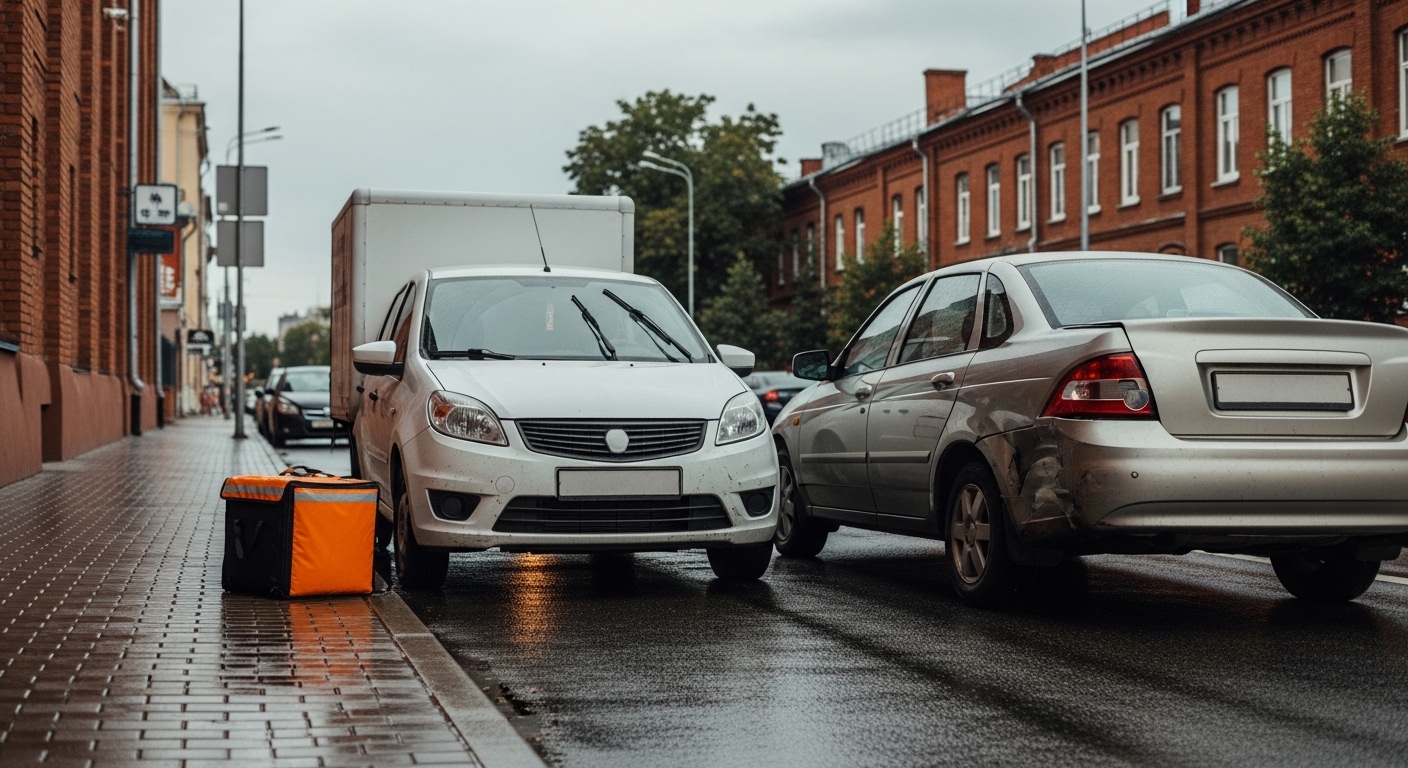
Delivery driver accident claims are becoming more common in 2026. Food delivery, grocery delivery, package delivery, and rideshare-style work now place more app-based drivers on the road. That creates a serious question after a crash: who pays for the injuries?
The answer is not always simple. A crash may involve the delivery driver, a personal auto policy, a commercial policy, the app company, another driver, or several insurers at once. The driver’s app status can change the claim. So can the type of delivery, the timing of the crash, and the driver’s insurance coverage.
Many accident victims assume the company name on the delivery app makes the company automatically responsible. That is not always true. Many platforms treat drivers as independent contractors. They also use insurance systems that depend on whether the driver was waiting for an order, heading to a pickup, carrying food, or driving for personal reasons.
This is why fast evidence matters. If the app status, route, order record, and crash details are not preserved, insurers may point fingers at each other. That delay can hurt the injured person. A strong claim should identify every possible coverage source early.
Why Delivery Driver Accident Claims Can Get Complicated
Normal car accident claims usually start with two drivers and two insurance companies. Delivery crashes can involve more layers. The driver may use a personal vehicle for paid work. The personal insurer may say the policy excludes commercial activity. The app company may say its coverage only applies during certain periods.
This creates a gap problem. One insurer may deny the claim because the driver was working. Another may deny it because the driver had not reached the right app stage. The victim can get stuck in the middle while bills grow.
App Status Can Decide Which Insurance Applies
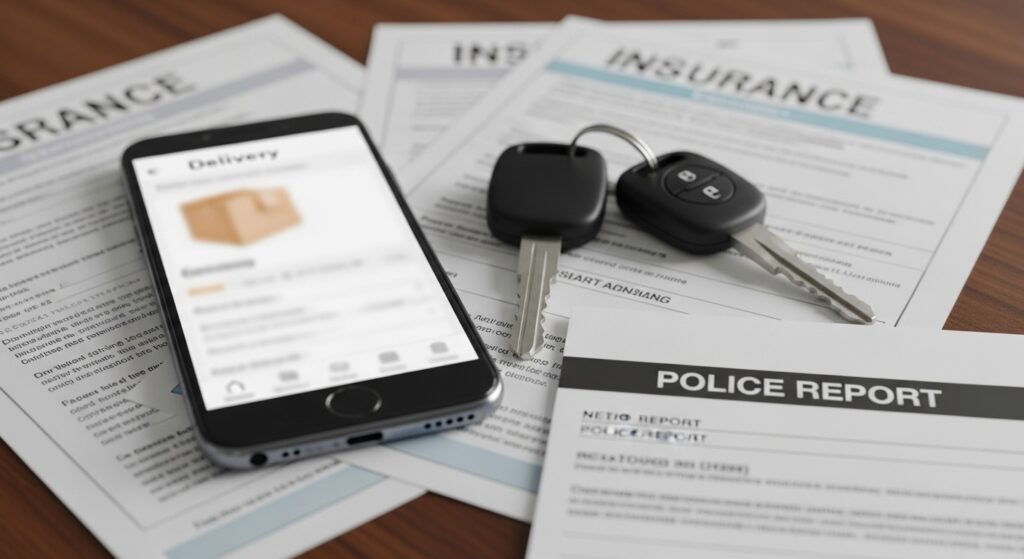
App status is one of the most important facts in a delivery crash. Was the driver offline? Was the driver logged in and waiting? Had the driver accepted an order? Was the driver driving to a restaurant, store, customer, or drop-off point?
Each answer can change the available insurance. Uber explains that its coverage depends on factors like fault, app status, trip stage, and the driver’s personal policy. DoorDash also describes auto liability coverage for certain covered delivery periods.
That is why victims should not rely only on what the driver says at the scene. The app record may tell a different story. Screenshots, delivery logs, order receipts, GPS history, and platform reports can all matter.
Offline Driving Usually Points To Personal Insurance
If the driver was not logged into a delivery app, the crash may look like a normal personal auto claim. In that case, the driver’s personal insurance may become the main coverage source.
But problems can still appear. The driver may have just finished a delivery. The driver may have been switching between apps. The driver may claim personal use while the trip history suggests work activity. A careful review can help prevent the wrong insurer from escaping responsibility.
Active Delivery May Open Commercial Coverage
When a driver has accepted an order or is actively completing a delivery, commercial or platform-related coverage may apply. This can matter a lot after a serious injury crash. A personal policy may not provide enough coverage for medical bills, lost income, pain, and long-term treatment.
Uber says it maintains at least $1,000,000 in coverage for property damage and injuries to riders and third parties when the driver is en route or on a trip. DoorDash also provides third-party auto liability insurance for covered delivery periods.
Victims should document any sign that the driver was working. Look for delivery bags, food containers, order labels, packages, phone screens, pickup receipts, or statements from the driver. These small details can help prove the delivery stage.
Multiple Apps Can Make The Claim Harder
Some drivers use more than one app. A driver may accept orders from different platforms during the same shift. This can make liability harder to sort out.
For example, the driver may be logged into one app but actively delivering for another. The driver may also switch from food delivery to rideshare work. In these cases, the exact timeline matters. Phone data, app activity, GPS records, and order history can help show which platform was active during the crash.
What Evidence Strengthens A Delivery Driver Accident Claim
The strongest delivery driver accident claims use clear evidence. The goal is to prove what the driver was doing, who caused the crash, which insurance applies, and how the injuries affected the victim.
Do not wait for the insurance company to gather everything. Insurers protect their own interests first. Victims should save proof early and avoid giving broad recorded statements before they understand the claim.
Scene Evidence And Digital Evidence Both Matter
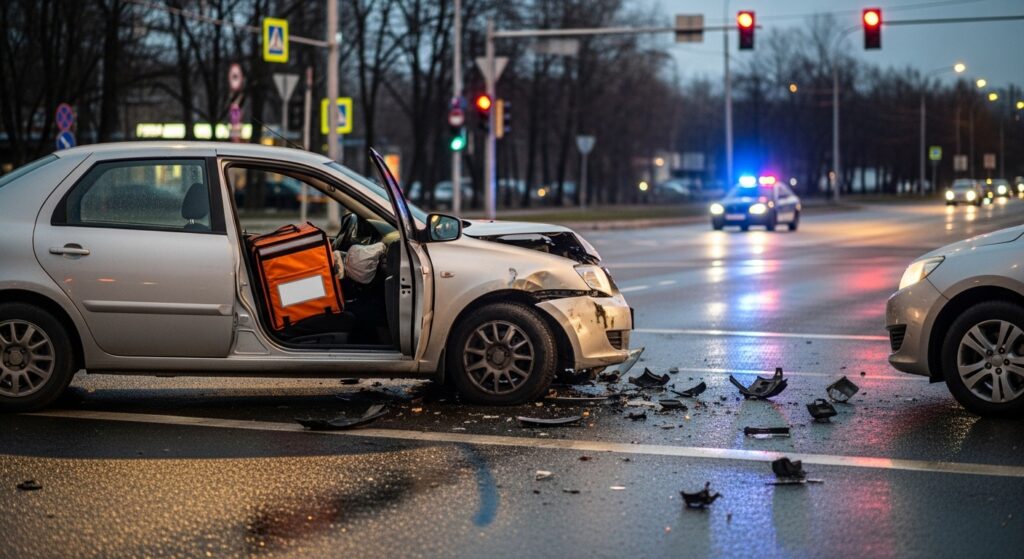
Start with the basics. Take photos of the vehicles, license plates, damage, street signs, traffic lights, skid marks, and final vehicle positions. Get witness names and contact information. Ask for the police report number if officers respond.
Then think about digital evidence. The delivery driver’s phone may show app activity, navigation, order status, messages, or route information. A nearby business camera may show the crash. Dashcam footage may show speed, lane position, or distracted driving.
If phone use or app activity may have caused the crash, read our related guide on phone data, app activity, and in-car tech evidence. That evidence can be very important in app-based driver claims.
Medical Records Should Start Right Away
Medical records can protect both your health and your claim. Get checked as soon as possible after the crash. Do not wait to see if pain disappears.
Some injuries get worse after the first day. Neck pain, back pain, headaches, dizziness, numbness, shoulder pain, and knee pain may appear later. Our article on injury symptoms that appear days after a car accident explains why delayed symptoms still matter.
Do Not Accept The First Insurance Answer
Delivery crash claims can involve fast denials. A personal insurer may say the driver was working. A platform insurer may say the driver was outside a covered period. Another insurer may blame a different driver.
Do not accept the first answer without reviewing the evidence. The crash timeline may show that coverage applies. The driver’s app records may support your claim. The police report, witness statements, and photos may also challenge the insurer’s version.
Insurance companies may also offer a quick settlement before the injury picture is clear. That can be risky. A fast offer may not include future treatment, lost income, therapy, long-term pain, or reduced earning ability. Our post on why insurance companies lowball injury claims explains this tactic.
For official coverage details, readers can review Uber’s page on insurance for rideshare and delivery drivers and DoorDash’s page on auto insurance maintained by DoorDash.
In the end, delivery driver accident claims depend on proof. The driver’s app status, route, order stage, phone activity, insurance coverage, and crash evidence can all affect the case. Do not assume one insurer has the final word.
After a delivery driver crash, get medical care, document the scene, save every detail, and avoid rushed statements. App-based accident claims move fast, but the victim should not carry the cost of someone else’s mistake.