
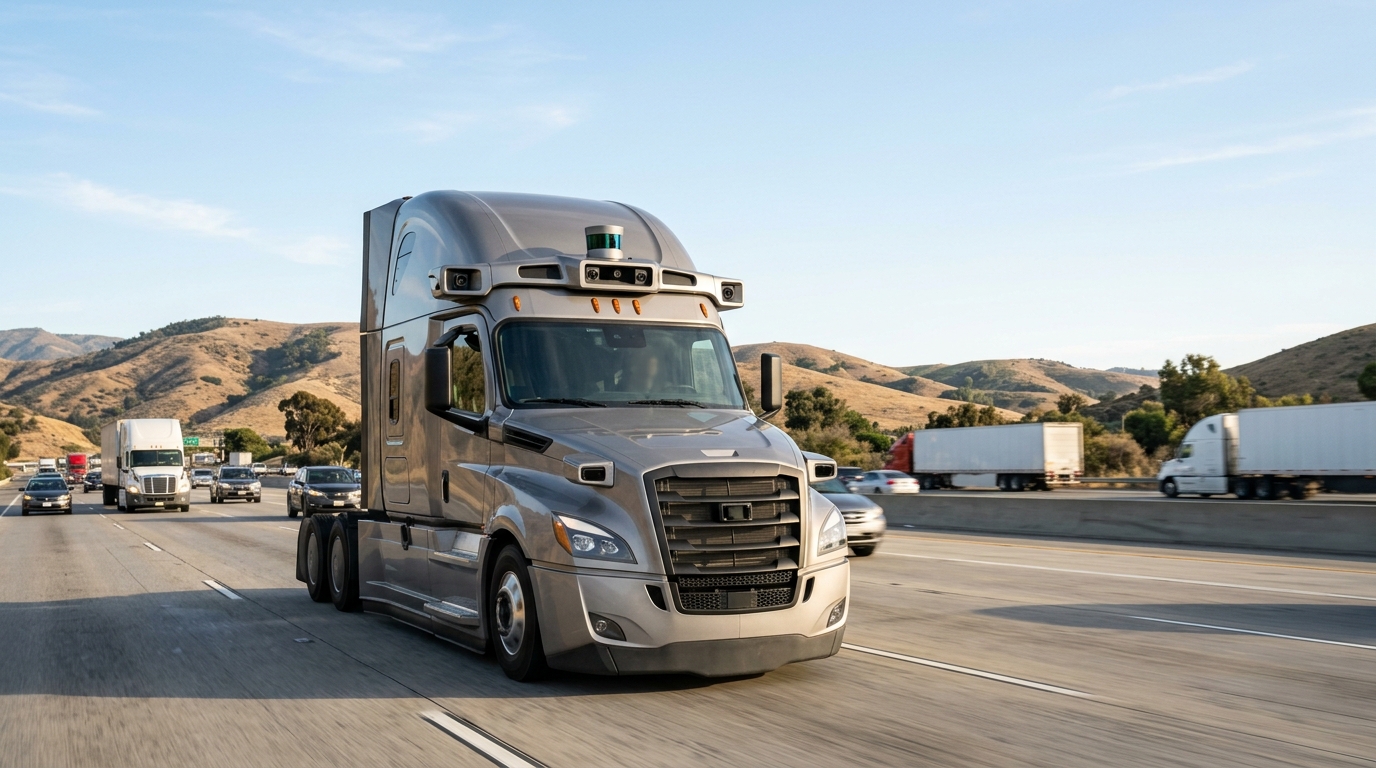
Autonomous truck accident claims are moving from a future-looking legal issue to a real concern for drivers, passengers, motorcyclists, and families who share the road with commercial vehicles. In 2026, California adopted major new autonomous-vehicle regulations that allow manufacturers to apply for permits to test and deploy heavy-duty autonomous vehicles. That change matters far beyond the technology industry because a serious truck crash can involve several layers of responsibility, digital evidence, commercial insurance, and complex questions about who controlled the vehicle.
When a traditional tractor-trailer crashes, investigators usually examine the truck driver, trucking company, maintenance history, cargo, hours of service, road conditions, and other motorists. When an autonomous or remotely assisted truck is involved, the investigation may expand to include software, sensors, cameras, remote operators, system warnings, vehicle logs, mapping data, and the company that designed or operated the automated driving system.
That does not mean the technology is automatically at fault. It means injured people may need to preserve more evidence than they would after an ordinary collision. If you already understand how modern vehicles store crash information, our guide to vehicle black box evidence in 2026 explains why event data, dashcam footage, and driver-assistance records can become important when fault is disputed.
Why Autonomous Truck Accident Claims Are Becoming More Important in 2026
California’s Department of Motor Vehicles announced new autonomous-vehicle regulations on April 28, 2026. Among other changes, the rules remove the previous prohibition on autonomous vehicles with a gross vehicle weight rating of 10,001 pounds or more and create a path for heavy-duty autonomous freight testing and deployment. The rules also expand safety, data-reporting, remote-operations, and enforcement requirements.
The regulatory change does not mean fully driverless trucks will suddenly be everywhere. Manufacturers must move through permitting and testing stages, but the change makes autonomous heavy trucks a much more practical accident-law issue than before.
Autonomous trucks create a different liability investigation
A collision involving an automated truck can look simple from the outside. A truck rear-ends a car, drifts into another lane, fails to stop, or collides with a vehicle at an intersection. The visible crash may resemble an ordinary commercial-vehicle accident. The difference lies in what controlled the truck before impact.
An investigation may need to determine whether the automated driving system was active, whether a safety driver was present, whether a remote operator was monitoring the truck, whether the system detected the hazard, and whether a human intervened. Investigators may also look at speed, braking, steering, sensor performance, route restrictions, weather limits, maintenance records, software status, and communications between the vehicle and remote personnel.
A human driver may still share responsibility
Automation does not automatically remove human responsibility. Some systems still require a driver to monitor the road or take control in certain situations. A safety driver may be responsible if they ignore warnings, become distracted, fail to intervene, or use the system outside its intended limits. Other motorists can also contribute to a collision by speeding, making unsafe lane changes, cutting in front of a truck, or violating traffic rules.
This is similar to the issues discussed in our article about ADAS accident claims and driver-assistance crashes. The level of automation may be different, but the central question remains the same: what did the human and the technology each do before the impact?
The autonomous vehicle company may become part of the case
If the automated driving system fails to detect a stopped vehicle, misreads a lane, responds incorrectly to road construction, or behaves unexpectedly, the company behind the technology may become relevant to the investigation. The facts could also raise questions about the truck manufacturer, sensor supplier, fleet operator, maintenance contractor, or software provider.
Liability is not created simply because a system failed to prevent a crash. Investigators still need to determine whether a party acted negligently, whether a product or system was defective under applicable law, and whether that conduct or defect actually contributed to the injuries. In a commercial setting, contracts and business relationships may also affect which company had control over the truck, its maintenance, its software, and its operation.
Digital evidence may decide what really happened
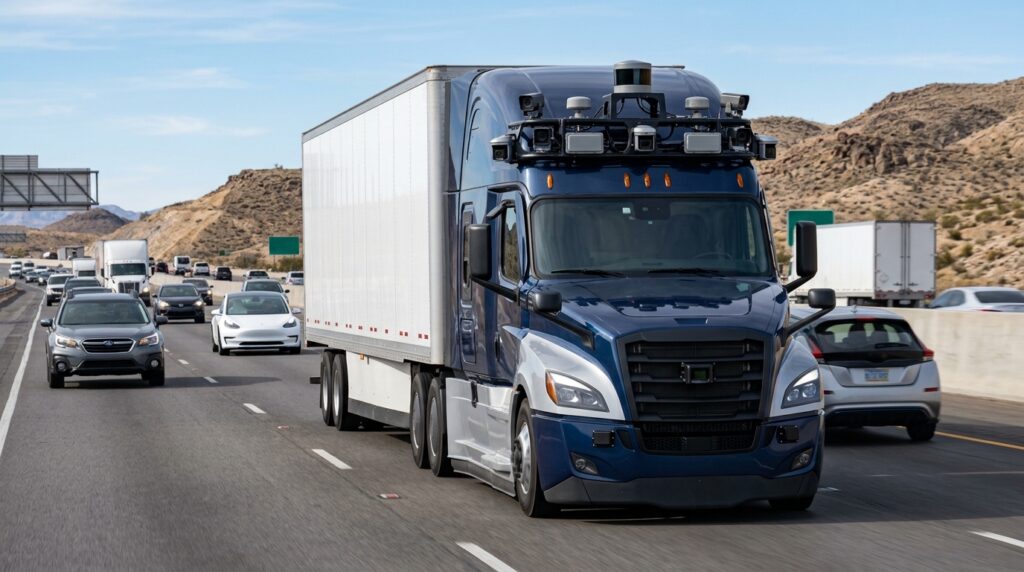
One of the biggest differences in autonomous truck accident claims is the volume of technical evidence that may exist. A modern automated truck can generate data about its speed, braking, steering, sensor detections, system status, route, warnings, and interactions with remote personnel. Cameras may record the roadway, nearby vehicles, lane markings, traffic signals, and the moments before impact.
California’s 2026 regulations also emphasize broader safety reporting, including collision information, system failures, vehicle immobilizations, hard-braking events, and miles traveled. Those regulatory records may not prove an individual injury claim by themselves, but they show why technical data is becoming increasingly important when automated vehicles are involved.
Preservation should begin before data disappears
Digital evidence is only useful if it still exists. Vehicles may be repaired, moved, sold, downloaded, updated, or returned to service. Video may be overwritten. Cloud-based records may have retention limits. A commercial operator may possess important evidence that an injured person cannot access without a formal request or legal process.
That is why early preservation matters. Photos of the truck, company markings, unit numbers, license plates, visible sensors, road conditions, debris, vehicle positions, traffic controls, and injuries can help establish a foundation. Witness information and nearby surveillance footage may also become critical. Our article on phone data, app activity, and in-car technology explains how digital timelines can strengthen a disputed accident claim.
Do not rely on a police report to capture the technology
A police or highway patrol report remains important, but it may not contain every technical fact. The responding officer may document vehicle positions, statements, visible damage, citations, and witnesses without downloading autonomous-system data. A report also may not explain whether a sensor failed or what the software detected before impact.
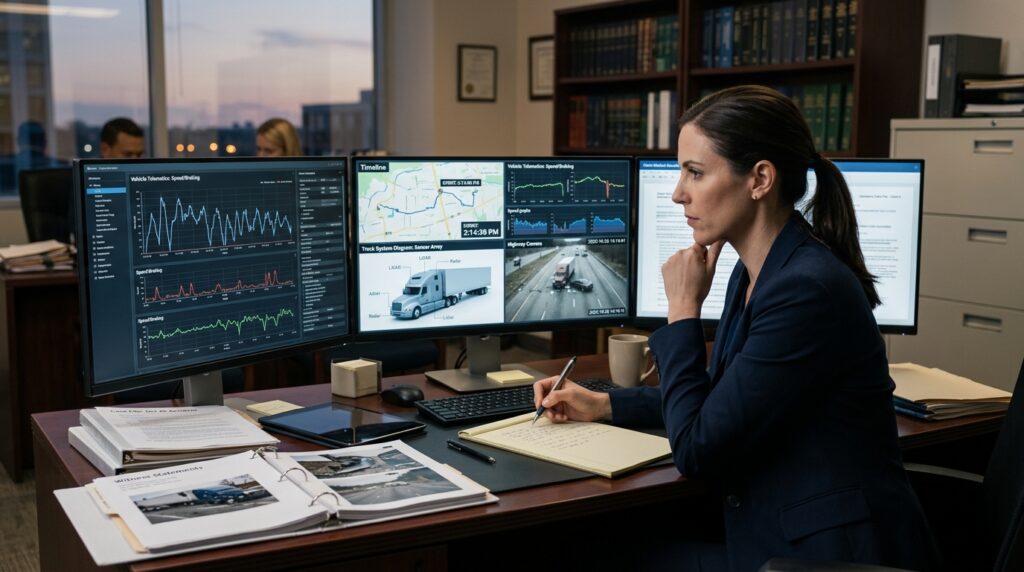
For that reason, technical records should be compared with traditional evidence rather than treated as a replacement for it. Crash reconstruction, vehicle inspections, photographs, medical documentation, witness statements, telematics, and video can work together to create a more accurate timeline.
How to Protect an Injury Claim After an Autonomous Truck Crash
The first priority after any serious truck collision is medical care. Large commercial vehicles can cause significant forces even when the exterior damage does not look dramatic. Emergency treatment, follow-up appointments, diagnostic testing, rehabilitation, and work restrictions can all become part of the record showing how the crash affected the injured person.
Some symptoms may appear or worsen later. Headaches, neck pain, back pain, dizziness, numbness, concussion symptoms, and soft-tissue pain should not be ignored simply because they were not severe at the scene. For more information, see our guide to injury symptoms that can appear days after a car accident.
Build the claim around liability, injuries, and available coverage
A strong autonomous truck injury claim still needs the same core elements as other accident claims: evidence showing how the crash happened, evidence connecting the crash to the injuries, documentation of financial and personal losses, and identification of available insurance or other sources of recovery. Technology adds another evidence layer, but it does not replace those basics.
Commercial crashes may involve several insurance policies or corporate entities. Depending on the facts, coverage could relate to the vehicle owner, fleet operator, trucking company, technology provider, employer, contractor, or another party. Injured people should avoid assuming that the first insurance policy they hear about is the only possible source of compensation.
They should also be cautious with fast settlement offers. Serious injuries may require future medical treatment, time away from work, rehabilitation, or long-term limitations that are not clear in the first few days. Once a release is signed, reopening the claim may be difficult or impossible. Our guide on why insurance companies lowball injury claims explains why early offers deserve careful review.
For current regulatory background, the California Department of Motor Vehicles’ 2026 autonomous vehicle regulation announcement explains the state’s new heavy-duty testing and deployment framework, safety-readiness requirements, remote-operation standards, reporting rules, and enforcement tools.
The practical lesson
The practical lesson is straightforward: an autonomous truck crash may involve technical records and multiple companies with different roles in putting the truck on the road.
After a serious collision, get medical care, document the scene if it is safe to do so, keep copies of every medical and insurance record, save communications, identify witnesses, and avoid making assumptions about who was responsible until the available evidence has been reviewed. In a technology-heavy commercial crash, the strongest claim is often the one that preserves both the traditional evidence and the digital evidence before either disappears.
This article is for general educational information only and is not legal advice. Liability rules, insurance requirements, filing deadlines, and available claims vary by jurisdiction and by the specific facts of each accident.